

25 years
Loch Broom (II)
Gaelic:
N/A
Previous Names:
ex City of London
Current Status:
Type:
Callsign:
IMO:
MMSI:
Launched:
Acquired:
Entered Service:
Disposed:
Scrapped
Iron SS
08/06/1871
1931
1937
Details
Ordered By:
Cost:
Registered:
Launched by:
Named after:
Aberdeen Steam Navigation Co., Aberdeen
Glasgow
Sea Loch in Wester Ross

Dimensions
Length:
241.9ft
Draught:
Breadth:
30.5ft
Gross Tonnage:
977
Technical
Builders:
John Elder, Govan (Fairfield Yard)
Yard No:
135
Engine Builders:
Machinery:
C2cyl, (46 & 80 - 39in) 70lb. 275hp 1 screw
Speed:
Hoist & Lifts:
Remarks:
Additional information from Clydeships.co.uk
Capacities
Passengers:
Cars:
Crew:
Lifeboats:
0
Facilities
Route Timeline
1931 - 1937: Glasgow - Outer Isles
Current, Last or Usual Route
Glasgow - Outer Isles Mail
History
When Yard No. 135 took shape at John Elder & Co.’s famous Fairfield yard in Govan in 1871, she was designed for speed, comfort, and coastal reliability. Built for the Aberdeen Steam Navigation Company, the iron screw steamer was christened SS City of London. Elder’s yard was then at the absolute forefront of marine engineering, pioneering high-pressure compound expansion engines that drastically reduced coal consumption. Fitted with this cutting-edge machinery and carrying a full clipper-style layout with a fine counter stern, she entered service on the demanding North Sea run between Aberdeen and the Thames.
For six full decades, City of London was a household name along the East Coast. She carried generation after generation of passengers, livestock, and general merchandise down the length of the British coast, establishing an enviable reputation for seakeeping in the notorious chop of the North Sea. By the time her owners decided to modernise their fleet in 1931, the vessel’s original machinery was ageing, but her sturdy wrought iron hull remained as sound as the day it was launched.
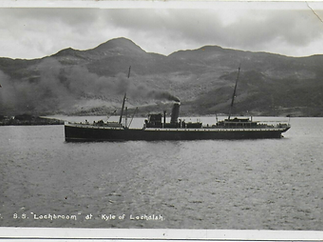
In 1931, the managers of David MacBrayne Ltd faced an immediate operational headache. The venerable Claymore, a 50-year-old mainstay of the West Highland trade, had finally reached the end of her working life and was bound for the breaker’s yard. To maintain their vital mail and cargo links between Glasgow, Oban, and the outer reaches of Lewis, MacBrayne's needed an immediate, substantial replacement. They purchased City of London, sent her to the Clyde for a thorough refit, and renamed her SS Lochbroom after the sea loch in Wester Ross.
Lochbroom was immediately assigned to the long, gruelling cargo and passenger circuit running out of Glasgow. Plying the waters around the Mull of Kintyre, through the Firth of Lorn, and out across the open swells of the Minch to Stornoway, she became an indispensable lifeline for the island communities. Island passengers quickly warmed to the old liner. Despite her age, her large, Victorian-proportioned saloons and heavy iron displacement made for a surprisingly comfortable voyage through rough waters, carrying everything from summer tourists and crofters to heavy agricultural machinery, wool, and livestock.
By the mid-1930s, MacBrayne’s fleet renewal programme was gaining real momentum. Motor vessels and modern, purpose-built steel steamers were entering service, offering far greater fuel efficiency and lower operating costs than the heavy, coal-burning iron ships of the previous century. As a vessel exceeding 1,000 gross tons, Lochbroom was expensive to fire during the lean winter months when passenger numbers plummeted.
In July 1937, after six years of dependable service in the West Highlands and an astonishing 66 years of continuous active service, SS Lochbroom was formally withdrawn. She was sold to the West of Scotland Shipbreaking Company and towed to Troon to be dismantled. While ship lovers often focus on famous MacBrayne paddlers like Columba or the iconic Iona, Lochbroom holds a unique place in West Coast shipping history: the grand old lady of the East Coast who came West to save a route, proving just how indestructible 19th-century Clyde shipbuilding truly was.
Text by Ships of CalMac
Gallery
